Every July, thousands of motorists begin looking at the latest registration plate and asking themselves the same question: “Is this the year I finally change my car?”
With 262 registrations arriving on 1st July, dealerships across the country are preparing for one of the busiest periods of the year. Attractive finance offers, trade-in deals, and a growing range of electric vehicles mean many drivers will seriously consider making the switch to an EV.
What we often see, however, is that most of the research goes into choosing the car itself. People compare finance packages, battery ranges, running costs, and manufacturer offers. The charging side of things is frequently left until much later, sometimes only when a delivery date has been confirmed.
Yet for many households, the long-term experience of EV ownership depends just as much on how the vehicle is charged as on the vehicle itself.
For homeowners who are already considering an EV, this is often the point where home charging and solar panels enter the conversation. Not necessarily because they planned to install both from the outset, but because they start looking at the broader household costs and asking how much of their driving and electricity usage could be covered more efficiently.
Why Is the 262 Registration Period a Good Time to Consider an EV?
The July registration period has traditionally been one of the most popular times for motorists to upgrade their vehicles. The arrival of the 262 plate brings fresh offers, manufacturer incentives, and an opportunity to move into newer technology.
Electric vehicles have matured considerably over the past few years. Driving ranges have improved, charging infrastructure has expanded, and drivers are becoming more familiar with what EV ownership actually looks like day to day.
Many homeowners begin by calculating fuel savings. A driver covering 20,000 kilometres annually could spend thousands of euro each year on petrol or diesel. Comparing those figures against home charging costs is often what prompts people to investigate EV ownership more seriously.
What’s interesting is that many people focus initially on the vehicle purchase itself. It is only later, after speaking to existing EV owners or researching running costs, that attention shifts towards charging arrangements and how they might affect long-term savings.
Why Should You Think About Your Home EV Charger Before You Buy the Car?
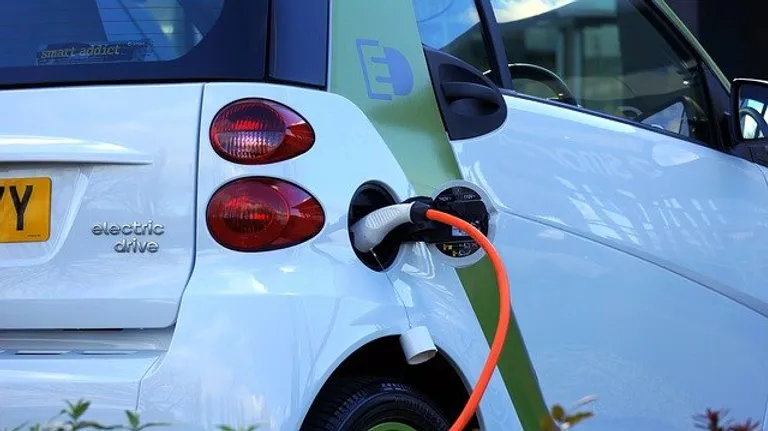
One of the biggest differences between EV ownership and traditional motoring is that most charging happens at home.
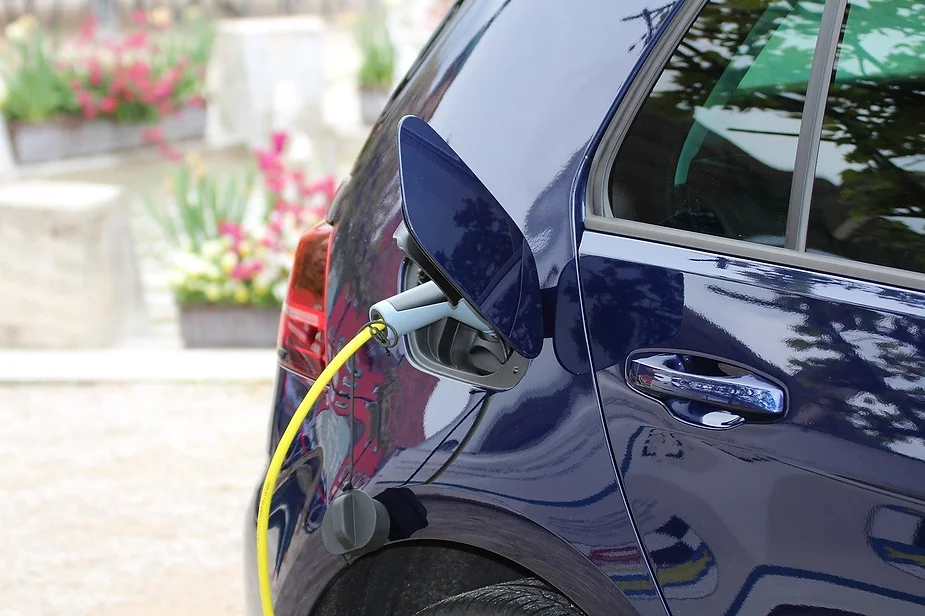
Many first-time EV buyers assume they will use public chargers far more often than they actually do. In practice, most households quickly settle into a routine where the car is charged overnight and ready to go the following morning.
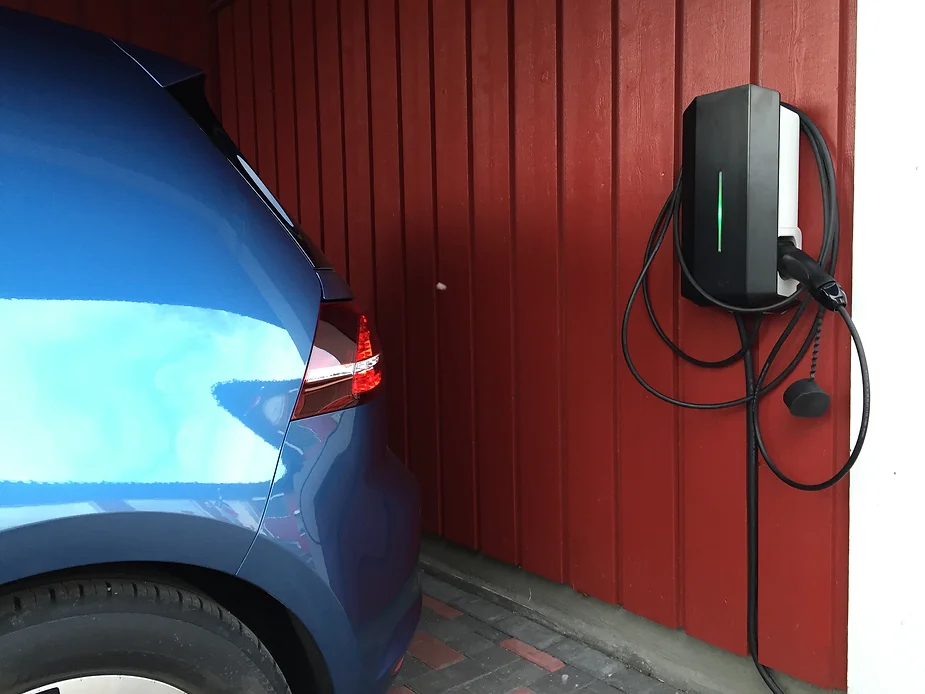
This is one reason why arranging a home EV charger early can make the transition much smoother. Rather than scrambling to organise an installation after the vehicle arrives, homeowners can have everything ready from day one.
We often find that people spend months comparing vehicle specifications but only start thinking seriously about charging once the purchase has been agreed. By then, they are usually asking practical questions about charger locations, installation requirements, electricity tariffs, and future energy costs.
Those are often the questions that have the biggest impact on everyday ownership.
Why Are More Homeowners Installing Solar Panels Alongside Their EV Charger?
For many households, the conversation doesn’t stop at the charger.
Once people begin looking at their electricity usage, they often start considering whether solar panels could play a role as well. Sometimes the enquiry begins with an EV charger and later expands into solar. In other cases, homeowners researching solar realise that an EV charger would fit naturally into their longer-term plans.
The reason is fairly straightforward.
An EV increases electricity usage. Solar panels help generate some of that electricity. Depending on driving patterns, household consumption, and the size of the solar system, the combination can work well together.
What many homeowners discover is that while transport savings initially attract their attention, reductions in household electricity usage often become just as important over time. The focus starts with the car but gradually expands to the wider energy picture.
Could This Be the Closest Thing to Free Driving?
No system completely eliminates costs, and actual savings depend on how much you drive, when you charge, and how much solar electricity is available throughout the year.
However, many homeowners are surprised by how much charging takes place at home and how little public charging they end up using during a typical week.
During brighter months, solar panels may contribute meaningfully towards EV charging requirements. During winter, many households rely more heavily on night-rate electricity tariffs. Most people end up using a combination of both.
The goal is rarely to achieve completely free driving. Instead, homeowners are often looking for greater predictability. After several years of fluctuating fuel prices and rising household energy costs, having more control over a portion of those costs appeals to many families.
Why Choose One Company for Solar Panels and EV Charger Installation?
One challenge homeowners regularly encounter is coordinating different parts of the project.
A charger installer may focus on the vehicle charging requirements. A separate solar installer may focus on energy generation. While there is nothing wrong with that approach, many households prefer having both systems considered together from the start.
This often leads to practical discussions around future plans. Some homeowners begin with a charger and add solar later. Others install both at the same time. Some are already thinking about battery storage, while others simply want a charging solution that works well today and leaves options open for the future.
Having those conversations early tends to make planning easier.
What Are Customers Saying?
For many homeowners, customer experience matters just as much as the technology itself.
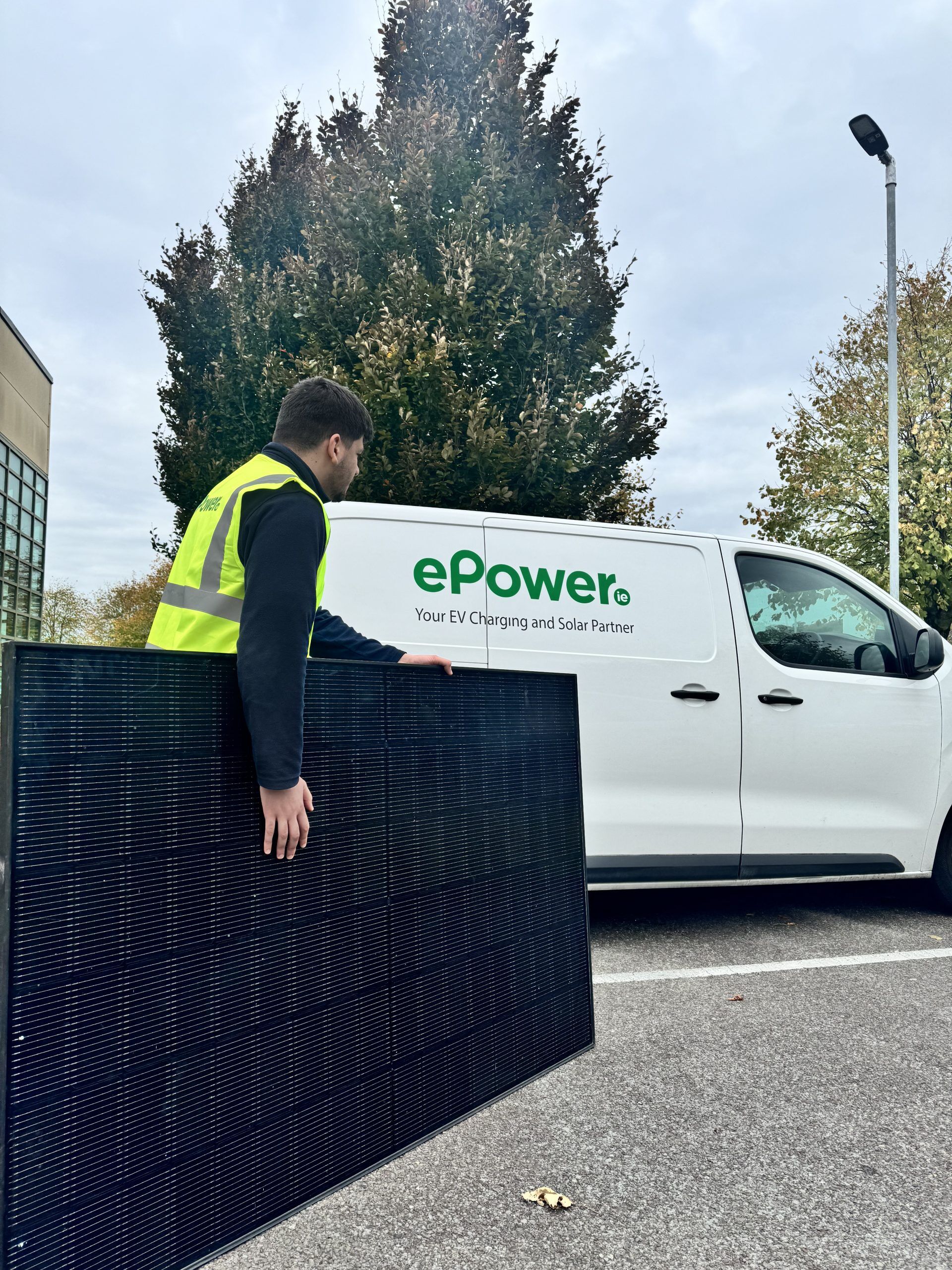
Brian Madden recently shared his experience after installing solar panels and an EV charger through ePower:
“We had a fantastic experience getting solar panels and an EV charger from ePower. In particular the service we received from Sharon Crosbie was excellent and she went above and beyond to ensure that we were aware of what the process was and the associated timescales. All in all I highly recommend them.”
Comments like this reflect something we see regularly. Most homeowners are not installing solar panels or EV chargers every day. They are making decisions that may affect their home for many years, so clear communication and realistic expectations are often just as important as the equipment itself.
Final Thoughts
The arrival of the 262-registration period will encourage many motorists to take a fresh look at electric vehicles.
For some, the decision will begin with fuel savings. For others, it may be driven by changing driving habits, lower maintenance requirements, or the availability of attractive finance offers.
What tends to happen quite naturally is that the conversation broadens. Once the vehicle has been chosen, attention turns to charging. Then questions arise about electricity costs, night-rate tariffs, solar panels, and how everything might work together.
That’s why many homeowners end up considering the car, charger, and solar system as part of the same decision rather than three separate projects.
If you’re considering a new 262 EV this summer, it’s worth taking the time to look at the charging and energy side of the equation as well. The homeowners who get the most from EV ownership are often the ones who planned for how they would charge the vehicle long before they collected the keys.
If you’re considering a new EV this summer and want to understand what charging at home could look like, it’s worth having a conversation before the car arrives.
Whether you’re looking at a home EV charger, solar panels, or a combination of both, getting the numbers early often makes the decision much easier.
If you’d like a no-obligation quote or simply want to explore the options, the team at ePower will be happy to help.