Why Are Irish Homeowners Turning to Solar Panels in 2025?
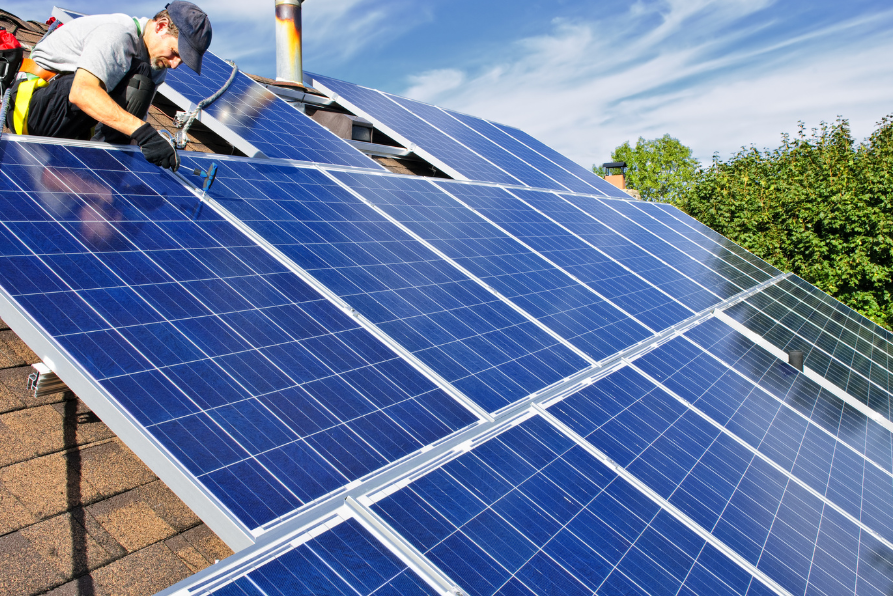
Solar panels have become one of Ireland’s smartest home upgrades, offering lower electricity bills, tax-free income, and sustainable living. With SEAI grants and 0% VAT still in place, Irish homeowners can save now and secure long-term financial returns. Across Ireland, rising electricity costs and growing awareness of climate goals have encouraged thousands of homeowners to install solar PV systems. A typical 4kWp solar setup can cut energy bills by up to 50%, and many households now generate enough power to sell surplus back to the grid under the Clean Export Guarantee (CEG).How Much Can I Save on My Energy Bills with Solar Panels?
Installing solar panels in Ireland allows you to generate free electricity during daylight hours, drastically reducing reliance on the national grid. Most households see their annual bills fall by 30–50%, depending on consumption and system size. Savings breakdown:- Lower electricity costs: Use solar power instead of buying from the grid.
- Avoid rising tariffs: Generate your own power as prices fluctuate.
- Battery storage benefits: Store energy to use at night or during outages.
What Grants and Tax Incentives Are Available for Solar Panels in Ireland?
The Sustainable Energy Authority of Ireland (SEAI) offers grants up to €1,800 for solar PV installations in homes built before 2021, while the 0% VAT rate on installation saves you even more upfront. Combined, these incentives make solar energy more affordable than ever.SEAI Solar PV Grant (2025 rates)
- €700 for the first kWp
- €1,400 for 2kWp
- €1,600 for 3kWp
- €1,800 for 4kWp and above
0% VAT Advantage
Since May 2023, solar panel installation and supply for private homes qualify for 0% VAT. This exemption also applies to home battery storage systems if purchased under the same contract.How Can Solar Panels Earn You Tax-Free Income?
From January 2024 to December 2028, Irish homeowners can earn up to €400 per year tax-free by selling excess solar electricity back to the grid through the Clean Export Guarantee (CEG). That’s tax-free income—no need to declare it. Under the Microgeneration Support Scheme, your electricity supplier pays between 18–24 cents per kWh for surplus power exported. For a medium-sized home, that can mean hundreds of euro each year in tax-free earnings. Combined with bill savings, many households see a total return of €600–€800 annually.What Is the Clean Export Guarantee (CEG) and How Does It Work?
The CEG allows you to sell unused solar energy back to the national grid. A smart meter measures your exports, and your energy supplier pays you directly—either as a credit on your bill or as a bank transfer.How to qualify:
- Install a registered solar PV system.
- Submit the NC6 form to ESB Networks through your installer.
- Get connected and start exporting your surplus power.
Payments under the CEG are automatically exempt from Income Tax, USC, and PRSI up to €400 per year, meaning homeowners can earn tax-free energy income with zero paperwork.
Can Solar Panels Increase My Property Value and Energy Independence?
Yes—solar panels can boost your home’s Building Energy Rating (BER), increase property value, and enhance energy independence. A solar-powered home appeals to buyers seeking lower energy bills and environmental sustainability.
Solar Panel Benefits include:
- Increased property value and market appeal.
- Reduced dependence on fossil fuels and rising grid prices.
- Long-term protection from volatile energy markets.
- Contribution to Ireland’s 2030 renewable energy targets.
With solar, you’re not just saving money—you’re investing in long-term energy security and adding lasting value to your home.
What Should I Know Before Installing Solar Panels in Ireland?
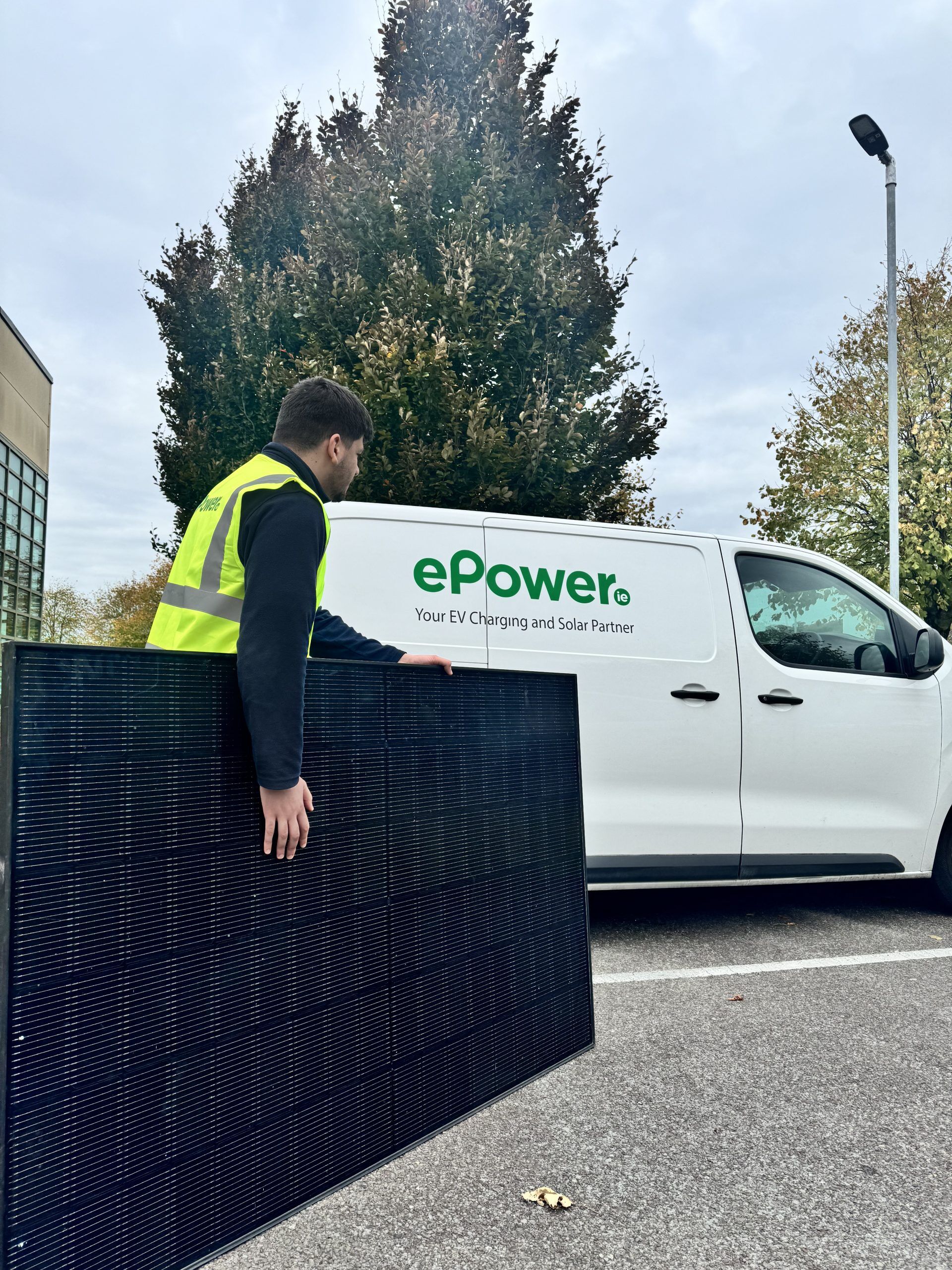
To qualify for grants and ensure a seamless installation, your system must meet SEAI and ESB standards. Working with an SEAI-approved installer like ePower guarantees compliance and safety.
Key steps for Installing Solar Panels:
- Choose a registered installer – Only SEAI-approved providers qualify for grant funding.
- Apply for the SEAI grant before installation – Get approval before work begins.
- Complete a BER assessment – Required after installation to validate grant payment.
- Submit the NC6 form – Your installer handles this for ESB registration.
- Complete within eight months – Grant approval expires if the project isn’t finished.
Professional installation ensures your system runs efficiently, safely, and remains eligible for all financial incentives.
How Can I Maximise My Returns from Solar Energy?
Maximising your returns means balancing self-consumption with exporting surplus power. You’ll get the most value by using your solar power during the day when it’s produced.
Practical strategies:
- Run appliances like dishwashers and washing machines during daylight hours.
- Consider a battery storage system to use power in the evening.
- Switch to an electricity plan that complements your solar generation.
- Track performance through your inverter app or monitoring system.
While exporting electricity is profitable, consuming your own solar power saves even more, as retail electricity costs more than the export rate.
Why Is Now the Best Time to Go Solar in Ireland?
2025 represents a golden window for Irish homeowners considering solar. SEAI grants are still generous, 0% VAT remains in effect, and energy suppliers are competing to offer the best CEG export rates.